
Implant Preparation & Bone Support
Sinus Lift in Glendale, CA
Gentle sinus lift surgery to create the bone support needed for secure upper jaw implants.
A sinus lift at Pacific Dental Care in Glendale, CA carefully adds bone to the upper jaw near the back teeth, creating the stability needed for dental implants. This procedure raises the sinus floor and restores lost bone so your implants can be placed safely and securely.
Sinus Lift in Glendale, CA
Why a Sinus Lift May Be Needed
When upper molars or premolars are lost, the sinus cavity may expand, and the jawbone beneath it naturally thins. A sinus lift safely raises the sinus floor and adds bone to support strong, long-lasting dental implants. At Pacific Dental Care, we tailor your treatment to restore stability and ensure predictable implant success.
Jump to:
Reasons You May Need a Sinus Lift →,
How the Procedure Works →,
Healing & Candidacy →
Reasons You May Need a Sinus Lift
A sinus lift is recommended when there is not enough bone height in the upper jaw to support a dental implant securely.
- Insufficient Bone Height Upper jawbone is too thin for implants.
- Enlarged Sinus Cavity Sinuses expand after tooth loss, reducing bone space.
- Bone Loss from Gum Disease Periodontal breakdown reduces bone volume.
- Long-Healed Extraction Sites Older extraction areas often require grafting before implants.
How the Sinus Lift Procedure Works
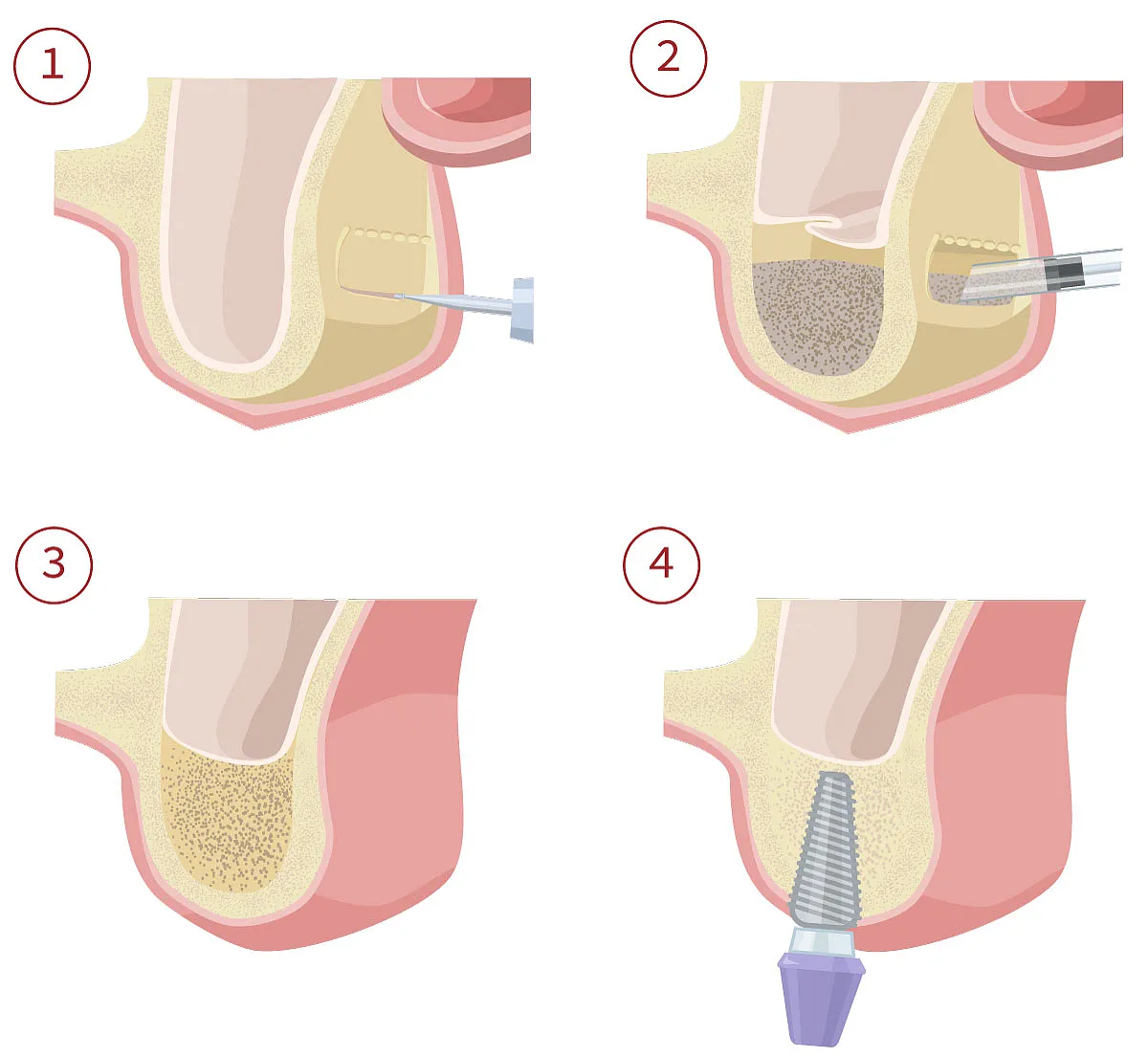
The sinus lift is performed under local anesthesia, with sedation available for added comfort. A small opening is made in the upper jawbone, the sinus membrane is gently lifted, and bone graft material is placed beneath it to create new height and density.
- Advanced imaging identifies bone thickness and sinus position.
- The sinus membrane is carefully elevated without damage.
- Bone graft material is placed to build structural support.
- The graft fuses with your natural bone as healing progresses.
Healing, Results & Candidacy
Most patients experience mild pressure or swelling for a short time after surgery. Over several months, the graft integrates into your natural bone, creating the strength needed for future implants.
- Healing Timeline Bone typically matures over 4–9 months depending on the graft.
- Ideal Candidates Patients lacking bone in the upper back jaw but wanting implants.
- Home Care Guidance Avoid pressure changes such as forceful nose blowing to protect the graft.
If you’ve been told you lack upper jawbone for implants, a sinus lift may be the solution. To learn more or schedule an evaluation, call our office or contact our team.
The short answer
A sinus lift is a procedure that adds bone to the upper jaw near the back teeth so there is enough height to support dental implants. Under local anesthesia, with sedation available, a small opening is made in the upper jawbone, the sinus membrane is gently lifted and bone graft material is placed beneath it. Over several months the graft fuses with your natural bone, creating the stability needed for implants where tooth loss or gum disease has thinned the jaw.
Sinus Lift FAQs
- Why do I need a sinus lift before getting dental implants?
- You may need a sinus lift before dental implants when there is not enough bone height in the upper jaw to hold an implant securely. After upper molars or premolars are lost, the sinus cavity can expand and the bone beneath it thins. A sinus lift adds bone between the upper jaw and the sinus cavity. That allows implants to be placed securely and last long-term.
- Is a sinus lift painful?
- A sinus lift is not usually very painful, because it is performed with local anesthesia. Sedation is also available for added comfort. Most patients report mild, manageable soreness afterward. Some mild pressure or swelling for a short time is also normal.
- How long does healing take?
- Initial healing after a sinus lift takes place within weeks. Full bone integration typically takes several months before implants can be placed. The bone usually matures over 4–9 months, depending on the graft. Avoiding pressure changes such as forceful nose blowing helps protect the graft while it heals.
- Are complications common?
- No, complications are rare with proper planning. We take detailed imaging to map bone thickness and the position of the sinus. That lets the sinus membrane be elevated carefully without damage. Following your home care guidance also protects the graft.
- Can a sinus lift and implant be done in the same visit?
- A sinus lift and an implant can be done in the same visit in select cases where there is adequate bone. In other cases, the implant is placed after the graft matures. The decision depends on how much bone is present to begin with. Imaging shows which approach suits you.
- Am I a good candidate for a sinus lift?
- You may be a good candidate for a sinus lift if you lack bone height in the upper back jaw or the sinus cavity sits too low. Bone loss from gum disease and long-healed extraction sites are common reasons. Ideal candidates want implants in that area but do not have enough bone. A consultation confirms whether a sinus lift is right for you.
- How do I get started?
- Getting started with a sinus lift begins with an evaluation and treatment planning visit. We use advanced imaging to measure bone thickness and the position of your sinus. We then explain whether a sinus lift is needed before your implants. To schedule, simply call our office or contact our team.
Best Dental Experience
Dr. Marine’s patient care is impeccable. Her attention to detail is exceptional, and she never takes shortcuts. She always recommends what’s truly best for her patients — even if it takes more time. She creates beautiful, natural-looking veneers that reflect her dedication to both function and aesthetics.


Real Smiles. Real Results


Affordable Care
We accept all major credit cards, debit cards, cash and checks. We also accept many dental insurance plans and for those who qualify, we partner with CareCredit for affordable monthly payments.

Schedule Appointment
Call us now at (818) 547-4949 or visit at 532 W Glenoaks Blvd , Glendale, CA 91202